
youtube / available
William Taylor - Two Worlds of the Welsh Harp (1999) (Medieval and Baroque)
Uploaded by Vingul
Celtic folkUnidentified upload

Uploaded by calefonxcalectric. Identification candidates are research leads, not confirmed recording metadata.
YouTube playback is for listening and research only. A public upload does not authorize sampling or production use; producers must obtain audio and permissions separately.
These values are unconfirmed candidates, not established artist or release facts.
No identification candidates were parsed from this upload.
No track timestamps were parsed from this upload.
Unidentified upload. No recording candidate has been established.
No external evidence is attached to these candidates.
00:00 Angelica beltà (Francesco Landini, c1325-1397) 01:44 Danse Royale (Anon., XIII c) 03:59 In saeculum viellatoris (Anon., XIII c) 05:18 Lamento di Tristano - La Rotta (Anon., XIV c) 07:52 Ductia (Anon., XIII c) 08:43 Veri floris sub figura (Ecole de Notre Dame, XIII c) 09:21 Clausolae (Domino) (Ecole de Notre Dame, XIII c) 10:54 Saltarello (Anon., XIII c) 12:10 Entre vous nouveaux mariés (Johannes Legrant, fl. c1420-1440) 13:27 Danceries (Claude Gervaise, 1525-1583): Gaillarde - Bransle de Bourgogne - Bransle de Champagne - Pavane & Gaillarde d'Angleterre * 18:09 Carmen saecularis (Heinrich Isaac, c1450-1517) * 19:24 Puisqu' en amour (Claudin de Sermisy, c1490-1562) * 20:29 Du bien qu'oeil absent ne peut choisir (Sermisy) * 21:21 Villancico (Bernaldino de Brihuega, † c1516) * 22:49 Saltarello (Vincenzo Galilei, c1510-1591) * 24:05 In saeculum artifex (Anon., XIII c) 25:10 Palästinalied (Walther von der Vogelweide, c1170-c1230) 26:14 Wie sol ich den gemynen (Walther von der Vogelweide) 26:50 Trotto (Anon., XIII c) 27:54 Ricercare (Jacob Obrecht, 1458-1505) 30:25 Gymel (Guilelmus monachus, XV c) 31:33 Estampie Royale (Anon., XIII c) 32:43 La Manfredina (Anon., XIV c) 34:32 Gentil gallans (Hayne van Ghizeghem, c1445-c1497) * 35:44 Tabulatura excerpts (Pierre Attaignant, c1494-1552): Te Deum - Magnificat primi toni * 38:21 Vray dieu d'amours (Antoine Brumel, c1460-c1513) * 39:54 Danceries (Gervaise): La volonté (Basse danse) - Bransle gay - Allemande - Bransle de Poictou * 44:37 Bicinium (Giovanni Gastoldi, c1554-1609) Elena Polonska: Medieval Harp, Irish Harp *, Tambourin Guy Durand: Vièle, 2nd Recorder / Roger Cotte: 1st Recorder The Medieval and Renaissance music presented on this record is performed on instruments which — although they may sound unfamiliar to most modern ears due to their having fallen into disuse during the past several centuries — are, nonetheless, fairly well- known through frequent iconographic presentations. In his Traité des Instruments de musique (ca. 1640) Pierre Trichet calls the Irish harp a “medieval instrument with metal strings...”, while since the 18th century the designation Irish harp has simply meant an instrument without pedals. The pedals, absolutely essential components of the modern harp, permit one to raise by either a half or a full tone one or the other series of strings. They permit, if not chromatic possibilities, at least the possibility of modulating on the instrument on the diatonic scale. The 17th century harp had, to a certain extent, the same ability due to a quite rudimentary but very efficient mechanism consisting of small hooks which one could manipulate by hand and which made it possible to raise one or the other string by a half tone. To make the terminology clear for the pieces contained on this record: the diatonic instrument which is small, held on the performer’s knees, and equipped with metal strings, is referred to as a Medieval harp; and we have called the diatonic instrument of medium size (approximately three feet high), capable of being modulated by hand, and having gut strings (in use since the 15th century), the Irish harp. The recorder — an instrument which underwent many changes from the middle ages to the 17th century — is represented on this disc in its most ancient form. It has a range of only an octave and a fifth but possesses a more powerful sonority, particularly in the bass, than the recorders employed in the Baroque period by Bach and Telemann. The vièle, a predecessor of the violin, is an instrument with three strings which was held under the chin — rather than on the knees, as was the practice with the viole. The vièle used in this recording was reconstructed at the end of the 19th century by the luthist Auguste Toibecque from pictures in the Chartres Cathedral. It is played with a bow which is curved on the outside like the ancient bows. The practice of presenting music of the sort recorded here in purely instrumental versions reflects a fairly recent conception (more accurately, a revival of the conception which was still extant in the 18th century — that only an instrumental musician’s sense of what was or was not within the bounds of good taste should govern his freely adapting all kinds ot scores to his instrument). In the 16th century, instrumental music for ballets which had been written for a specific occasion often had, as well, a text which ‘could be sung; and in the middle ages instrumental music was commonly adapted from the vocal repertory, both religious and secular. So it is perfectly legitimate for modern musicians to interpret this music either with voices alone, voices with instruments, or instruments alone. Notes by ROGER COTTE TV 34019S, Turnabout Vox, 1965
Uploaded by Vingul
Celtic folkUnidentified upload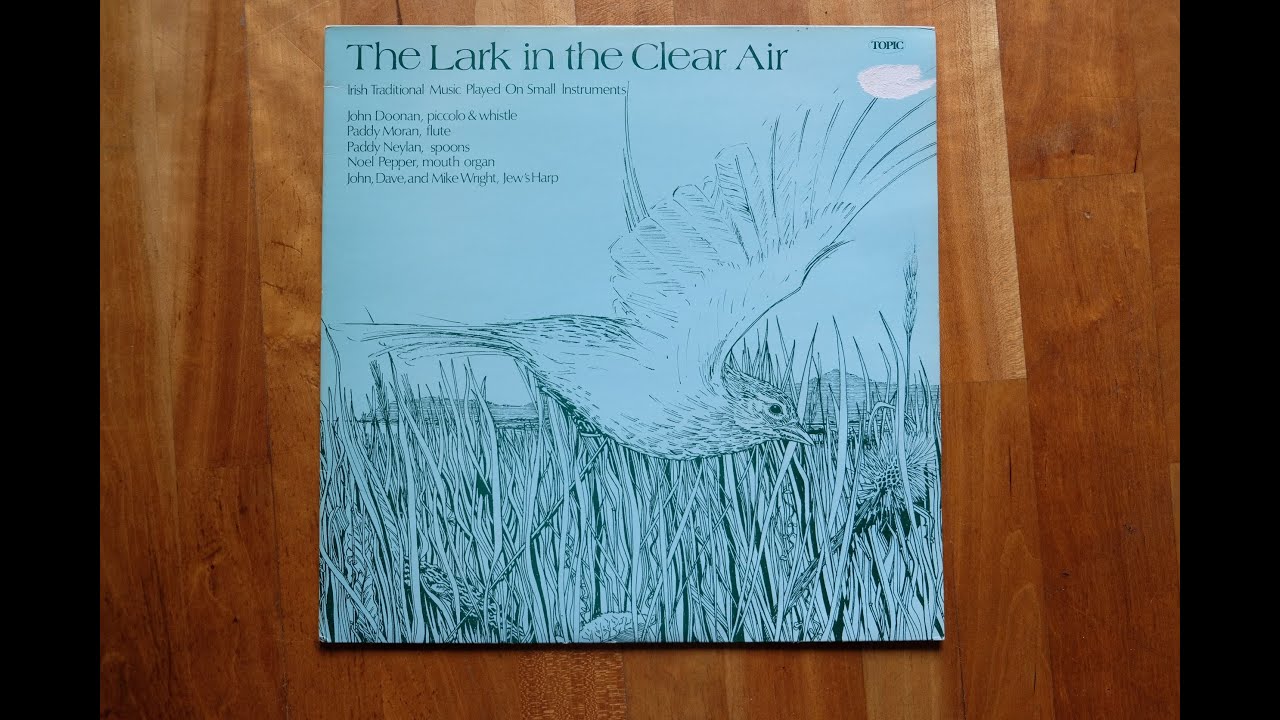
Uploaded by Joch Vomberg
Celtic folkUnidentified upload
Uploaded by calefonxcalectric
Celtic folkUnidentified upload
Uploaded by Το φιλί της Πεταλούδας
Celtic folkUnidentified upload
Uploaded by Joch Vomberg
Celtic folkUnidentified upload
Uploaded by Joch Vomberg
Celtic folkUnidentified upload

Uploaded by Joch Vomberg
Celtic folkUnidentified upload