youtube / available
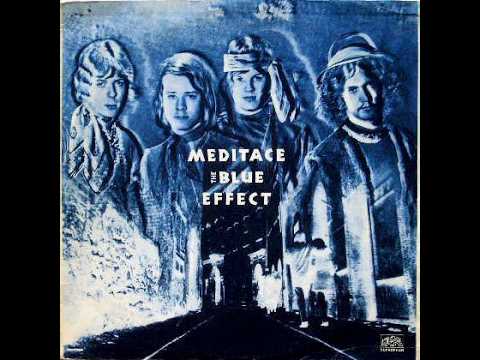
BLUE EFFECT (MODRÝ EFEKT)-MEDITACE (1970 Jazz Rock/Fusion • Czech Republic)Full Album
Uploaded by Uncle Lakis / Music Time Machine /For Collectors
Art rockBluesFusionUnidentified upload

Uploaded by Uncle Lakis / Music Time Machine /For Collectors . Identification candidates are research leads, not confirmed recording metadata.
YouTube playback is for listening and research only. A public upload does not authorize sampling or production use; producers must obtain audio and permissions separately.
These values are unconfirmed candidates, not established artist or release facts.
No identification candidates were parsed from this upload.
No track timestamps were parsed from this upload.
Unidentified upload. No recording candidate has been established.
No external evidence is attached to these candidates.
Spectrum are an Australian progressive rock band which formed in April 1969 and broke up in April 1973. The original line-up was Mark Kennedy on drums, Lee Neale on organ (ex-Nineteen87), Bill Putt on bass guitar (ex-Lost Souls), and Mike Rudd on guitar and lead vocals (ex-Chants R&B, The Party Machine). In August 1970 Kennedy was replaced by Ray Arnott on drums. These members also performed under the alter ego, Indelible Murtceps, from 1971 to 1973. Spectrum had a number-one hit, "I'll Be Gone" (January 1971), on the Go-Set National Top 60 singles chart. After Spectrum and Indelible Murtceps disbanded, Putt and Rudd formed Ariel. In 1999 the pair formed Spectrum Plays the Blues, which later trimmed their name back to Spectrum. On 7 August 2013 Bill Putt died, after a heart attack. Spectrum were formed in April 1969 in Melbourne, as a progressive rock group, by Mark Kennedy on drums (ex-Gallery), Lee Neale on organ (ex-Nineteen87), Bill Putt on bass guitar (ex-Gallery, The Lost Souls), and Mike Rudd on guitar, harmonica and lead vocals (ex-Chants R&B, The Party Machine, Sons of the Vegetal Mother). Initially the group drew on the work of contemporary bands such as Traffic, Soft Machine and Pink Floyd; they played cover versions of their material. Spectrum developed their own style as Rudd began writing original material. Alongside Kennedy's drum solos, Putt's bass playing and Neale's keyboard work, a feature of Spectrum's sound was Rudd's guitar playing — he eschewed the near-universal use of guitar picks – using a finger-picking style on a vintage Fender Stratocaster to develop a characteristic sound. During twelve months of regularly performing on the local dance and discothèque circuit, Spectrum refined their original material. They appeared at various "head" (see cannabis slang) venues around Melbourne: T.F. Much Ballroom, Garrison and Sebastian's, alongside other progressive rockers, Tully, Tamam Shud and Sons of the Vegetal Mother. Spectrum used an elaborate set-up which included a large PA and a full multi-media light show; often supplemented by a performance troupe, Tribe. Early in 1970 they cut a demo single which they hawked to record companies as a 7" acetate. One side was an early, folk version of "I'll Be Gone". The B-side was another original, "You Just Can't Win". According to rock music historian, Ian McFarlane, these acetates are now "impossibly rare" and only two or three copies are known to have survived. Despite a loyal following and praise from the music press – including from Australia's pop newspaper Go-Set – the band were almost broke by mid-1970. After they signed to EMI under their progressive rock imprint, Harvest Records, the band went into the studio in August 1970 to make their first official recordings, using producer, Howard Gable (The Masters Apprentices).Rudd described the recording sessions, "[we had] gone into the studio in order to record 'Launching Place Parts I & II', to help promote the Launching Place Festival. When we had finished recording those, Howard asked us did we have any others and I said, 'Yeah, I've got this one called "I'll Be Gone"', which we recorded as an afterthought. But then it became a hit single." Rudd had decided to add a harmonica part to the song. The festival at Launching Place occurred in December 1970.[6] "I'll Be Gone" was released in January 1971,[7] which became a surprise No. 1 Australian hit on the Go-Set National Top 60 singles chart in May that year.[8] It became one of the most enduring Australian rock songs of that era.[3] McFarlane described it as a "shuffling, hypnotic" track, for which "suddenly the band was in big demand. Studio Album, released in 1971 Songs / Tracks Listing LP 1: 1. But That's All Right 00:00 2. Love's My Bag 04:32 3. Your Friend And Mine 08:49 4. Untitled 16:12 5. Play A Song That I Know 20:44 6. What The World Needs (Is A New Pair Of Socks) 24:33 7. Virgin's Tale 31:52 8. A Fate Worse Than Death 35:19 9. Tell Me Why 40:03 LP 2 - The Sideways Saga : 10. The Question 41:51 11. The Answer 42:58 12. Do The Crab 45:15 13. Everybody's Walking Sideways 50:10 14. Trust Me 52:55 15. Don't Bother Coming Round 59:00 16. Fly Without Its Wings 1:09:09 17. Mama, Did Jesus Wear Make Up? 1:11:19 18. Milesago Line-up / Musicians - Michael Rudd / acoustic & electric guitars, recorder, vocals - Lee Neale / organ, harpsichord, piano, vocals - Bill Putt / bass - Ray Arnott / drums, percussion, vocals With: - Jeremy Noone / saxophone (4,5,8) - David Clarke / saxophone (4,8) - Steve Miller / trombone (4) - Simon Wettenhall / tuba (8)
Uploaded by Uncle Lakis / Music Time Machine /For Collectors
Art rockBluesFusionUnidentified upload
Uploaded by Uncle Lakis / Music Time Machine /For Collectors
FusionPsychedelic rockUnidentified upload
Uploaded by Uncle Lakis / Music Time Machine /For Collectors
FunkSalsaSoulUnidentified upload
Uploaded by Uncle Lakis / Music Time Machine /For Collectors
BluesPsychedelic rockUnidentified upload
Uploaded by Uncle Lakis / Music Time Machine /For Collectors
Space rockUnidentified upload
Uploaded by Uncle Lakis / Music Time Machine /For Collectors
BluesCountryPsychedelic rockSoulUnidentified upload
Uploaded by Uncle Lakis / Music Time Machine /For Collectors
FunkFusionProgressive rockUnidentified upload
Uploaded by Uncle Lakis / Music Time Machine /For Collectors
Canterbury sceneProgressive rockUnidentified upload