youtube / available
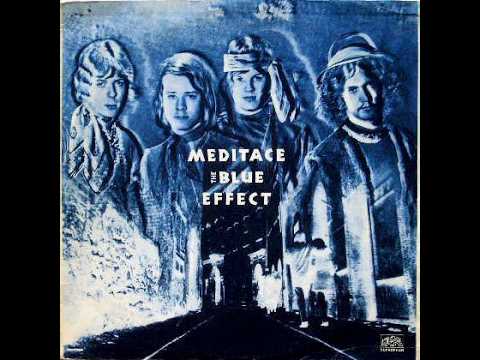
BLUE EFFECT (MODRÝ EFEKT)-MEDITACE (1970 Jazz Rock/Fusion • Czech Republic)Full Album
Uploaded by Uncle Lakis / Music Time Machine /For Collectors
Art rockBluesFusionUnidentified upload

Uploaded by Uncle Lakis / Music Time Machine /For Collectors . Identification candidates are research leads, not confirmed recording metadata.
YouTube playback is for listening and research only. A public upload does not authorize sampling or production use; producers must obtain audio and permissions separately.
These values are unconfirmed candidates, not established artist or release facts.
No identification candidates were parsed from this upload.
No track timestamps were parsed from this upload.
Unidentified upload. No recording candidate has been established.
No external evidence is attached to these candidates.
In the second half of the seventies, the Canadian province of Quebec experienced a new wave of jazz-rock popularity. For veteran bands, this was very much to their advantage: after all, few of the professionals who had established themselves on the local scene had not undergone a baptism of fire with fusion prog. And even newly-minted bands tried to sensitively capture the mood of the public. Another question is that not everyone succeeded. The Aquarelle team was lucky in this regard. The leader of the instrumental septet, the young composer and keyboardist Pierre Lescaut, managed to compose exceptionally strong material. And to implement it, along with the mastermind (piano, synthesizer, electric piano, harpsichord), yesterday's conservatory students took on the task: Pierre Bournaki (electric and acoustic violins), Michel de Lisle (bass, percussion), Jean-Philippe Gelinez (saxophone, flute), André Leclercq (drums, percussion), Stephane Morency (guitars) and Anne-Marie Courtemanche (vocals). In Montreal's Studio Six, where our seven brave souls arrived in the late autumn of 1977, experienced assistants worked with the group - cellist Mario Giraud and chorister Helene Martin. The musicians acted with inspiration, but at the same time maintained a sober calculation, demonstrating an absolute understanding of the plans of maestro Lescaut. Hence the praiseworthy result. The opening number "La Magie Des Sons" fits perfectly into the stylistic line traditional for the Quebec progressive school. The combination of a chamber pole with an energetically powerful rock pulsation brings to mind the legendary predecessors of Aquarelle - the magnificent Maneige. However, one cannot fail to note the individual author's style of Pierre - a clear lyrical-dramatic basis, revealed by means of reflective pianistic parts, episodically shaded by strings. Let's add to the above interesting rhythmic pranks with the participation of agitated saxophone entrechats at the final stage of the track. As a result, we get a strong passage, testifying to the healthy ambitions of the debutants. The playful charm of the sketch "Francoise" is based on a cinematic-carefree flute melody and a splashing cascade of virtuoso jazz sparks flying in all directions from the fiery tandem of keys + sax. The single "Bridge" with its powerful brass beginning is performed in the then fashionable funk manner, which does not cancel out a touch of academic intelligence. The union of the earthly and the heavenly, dreams and reality is clearly presented in the title piece, which is supported by both bright pastoral chamber twists and short, dense rock flashes. The 8-minute construction of "Aquarelle" is practically a benchmark example of fusion art, now professed by the Japanese KBB, Fantasmagoria and the like. The place for romantic aspirations is in the context of the position of "Volupté". Well, and the program ends with the insanely rainbow funk digression "Espéranto" - not devoid of grace, but still slightly annoying due to its monothematic nature Tracklist: A1. “La magie des sons” 00:00 A2. “Françoise” 06:48 A3. “Bridge” 11:41 A4. “Sous un arbre” 18;07 B1. “Aquarelle” 22:39 B2. “Volupté” 30:59 B3. “Espéranto” 35:34 Credits: Pierre Lescaut — piano, electric piano, Clavinet, synthesizer, composer Stéphane Morency — acoustic guitar, electric guitar Pierre Bournaki — violin, electric violin Jean-Philippe Gélinas “Philo” — soprano saxophone, alto saxophone, flute Anne-Marie Courtemanche — vocals Michel De Lisle — fretless bass, electric bass, percussion André Leclerc — drums, percussion Aquarelle — arrangements, co-producer Mario Giroux — cello Hélène Martin — backing vocals
Uploaded by Uncle Lakis / Music Time Machine /For Collectors
Art rockBluesFusionUnidentified upload
Uploaded by Uncle Lakis / Music Time Machine /For Collectors
FusionPsychedelic rockUnidentified upload
Uploaded by Uncle Lakis / Music Time Machine /For Collectors
FunkSalsaSoulUnidentified upload
Uploaded by Uncle Lakis / Music Time Machine /For Collectors
BluesPsychedelic rockUnidentified upload
Uploaded by Uncle Lakis / Music Time Machine /For Collectors
Space rockUnidentified upload
Uploaded by Uncle Lakis / Music Time Machine /For Collectors
BluesCountryPsychedelic rockSoulUnidentified upload
Uploaded by Uncle Lakis / Music Time Machine /For Collectors
FunkFusionProgressive rockUnidentified upload
Uploaded by Uncle Lakis / Music Time Machine /For Collectors
Canterbury sceneProgressive rockUnidentified upload